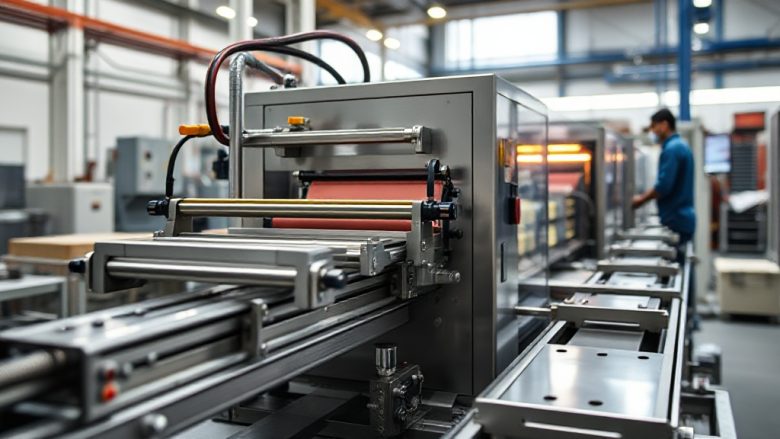
What Shrink Wrapping Machines Are Built From, and Why It Matters
Two shrink wrappers can look identical from across a factory floor: same footprint, same film roll position, same control box. Up close, the difference is in the steel. One frame is thin-walled tube with a painted finish; the other is a heavier welded section with a machined mounting face. Those details decide how the machine behaves after two years of three-shift running. If you are buying a Shrink wrapping machine, judging the build is as important as judging the speed rating.
The search intent behind this topic is usually compare-and-buy: buyers want to know which materials and finishes justify a higher price and which are cosmetic. This article breaks a wrapper down by material category, explains the grades commonly used, and shows how each choice affects lifespan, maintenance and product quality.
Why the Frame Decides Almost Everything
The frame carries the film carriage, the sealing bar, the conveyor and the tunnel hood. Every one of those parts moves, vibrates or heats, and the frame absorbs all of it. A frame that flexes under load will slowly misalign the sealing jaw, and a misaligned jaw produces weak seals long before any component fails outright.
Mild steel versus stainless steel
Mild steel is the standard choice for dry, clean production areas. It is strong, easy to weld and inexpensive, but it must be protected. Stainless steel costs more and is harder to machine, yet it is the correct choice for food rooms, washdown areas and any plant where film dust combines with humidity.
Wall thickness and weld quality
A 2 mm wall section resists twist far better than a 1.5 mm section of the same profile. Look at the welds: continuous welds at load-bearing joints and ground-flush finishes indicate a frame designed for vibration, while tack welds and filler paste suggest a frame designed for the showroom.
Surface Finishes and What They Protect Against
Finishes are where buyers are most often misled, because a good paint job looks the same as a good protective system in a photograph. The question to ask is not what colour the frame is, but what the coating is expected to survive.
Powder coating versus wet paint
Powder coating is applied electrostatically and cured at high temperature, producing a thicker, more chip-resistant layer than most wet paints. On a wrapper that sees daily cleaning and occasional knocks from film rolls, that difference shows up as fewer rust blooms around bolt holes and panel edges.
Pre-treatment before coating
Coating adhesion depends on what happens before the spray gun. Degreasing and phosphate pre-treatment give the coating a keyed surface; skipping them leaves a finish that lifts in sheets once moisture creeps under a scratch. Ask how the frame is pre-treated, not just what is sprayed on it.
Machined and anodised aluminium
Aluminium is common for film carriages, guide rails and sealing bar mounts because it is light and does not rust. Anodising hardens the surface and improves wear resistance where film runs continuously over a guide. Untreated aluminium in a damp room will oxidise and stain, so anodised parts are worth specifying on any machine that runs in a humid environment.
Component Grades Inside the Machine
Frames and finishes are visible; the parts that fail first are usually hidden. A shrink tunnel is a hot, moving environment, and the grade of bearing, belt and heater inside it determines how often maintenance stops the line.
Bearings and bushings
Sealed, branded bearings cost more than open generic units but tolerate film dust and cleaning spray far better. On conveyor rollers and film carriage tracks, sealed bearings are the difference between annual replacement and quarterly greasing.
Belts and conveyor materials
Silicone and PTFE-coated belts resist the tunnel heat that destroys ordinary rubber. The conveyor on an Automatic Shrink Wrapping machine runs continuously through the heat zone, so belt grade is a wear item you should price into the running cost, not treat as an afterthought.
Heating elements and insulation
Tubular heaters in a quality tunnel are mounted in reflective housings with proper insulation behind them. Poor insulation leaks heat into the frame and the surrounding room, raising energy consumption and making the machine uncomfortable to work near.
How Materials Affect Seal Quality and Film Performance
Seal quality is often blamed on film, but the sealing bar and its mounting are just as influential. A bar that flexes or cools unevenly produces seals that look fine on the line and split in transit.
Sealing bars are typically clad in PTFE or a similar release surface so hot film does not stick. The cladding wears, and a worn surface causes wrinkles and incomplete seals. The bar’s backing material matters too: a rigid, flat mounting keeps pressure even across the full width, while a light mounting bows under pressure and seals only at the centre.
In the tunnel, airflow and temperature uniformity decide how the film shrinks. A well-built shrink tunnel Machine uses balanced blowers and insulated walls so every package sees the same conditions, which is what prevents the loose corners and uneven shrink that make a finished pack look untidy.
Comparing Material Choices Side by Side
The table below summarises the trade-offs buyers face most often. Use it as a checklist when comparing quotations, because two machines at similar prices can differ sharply in what they are made from.
| Material choice | Typical use | Trade-off |
|---|---|---|
| Mild steel frame, powder coated | Dry production areas | Lower cost; needs coating integrity checks |
| Stainless steel frame | Food, washdown, humid plants | Higher cost; far lower corrosion risk |
| Anodised aluminium rails | Film carriages and guides | Light and wear-resistant; check anodising thickness |
| Sealed branded bearings | Conveyors and tracks | Higher part price; fewer stoppages |
| Silicone or PTFE belts | Tunnel conveyors | Heat resistant; confirm replacement availability |
| Insulated heater housings | Shrink tunnel | Better energy use; adds build cost |
Common Buying Mistakes Around Build Quality
Most poor purchases are not caused by choosing the wrong machine type. They come from judging build on appearance and specification sheets alone.
- Comparing speed ratings without comparing frame rigidity. A high cycle rate on a flexible frame simply wears the sealing mechanism faster.
- Accepting a painted finish without asking about pre-treatment, then finding rust at panel edges within a year.
- Ignoring the humidity and cleaning regime of the room where the machine will stand.
- Treating belts, bearings and heater elements as minor consumables rather than pricing their replacement intervals.
- Buying on price alone without confirming that spare parts and service support will remain available.
A practical approach is to inspect a machine of the same model already in service, if one is available, and look specifically at weld quality, coating condition around fasteners and belt wear. These three checks reveal more about build than any brochure.
Durability Summary: What to Specify
Build quality in a wrapper comes down to a short list of decisions. Specify a frame section heavy enough for the load, with continuous welds at stressed joints. Match the frame material to the room: mild steel with a properly pre-treated powder coat for dry areas, stainless steel where moisture or washdown is present. Choose anodised aluminium for sliding and guiding surfaces, sealed bearings on all rotating parts, and heat-rated belts in the tunnel.
Ask for the heater and insulation details, because they affect both energy cost and operator comfort. Confirm that the sealing bar mounting is rigid and that the release surface is replaceable. Finally, check that consumables and spares are standard items rather than proprietary parts that lock you into a single supplier.
A machine built this way will not necessarily look different from a cheaper one on the day of delivery. It will look different in year three, when the frame is still square, the seals are still strong and the maintenance log is short.