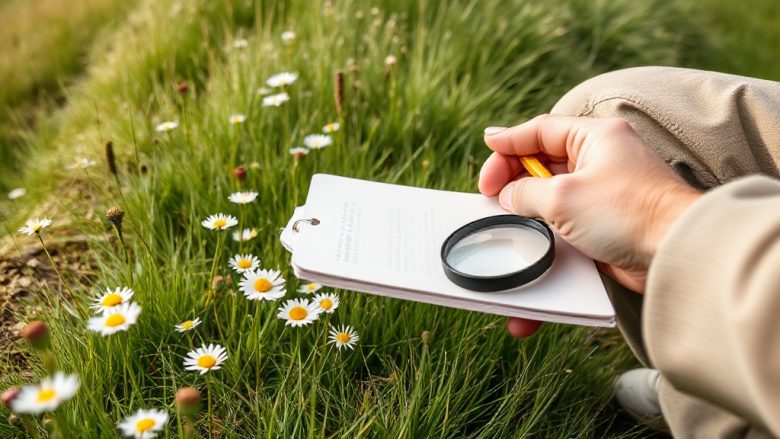
The first time you really notice a wildflower, it’s rarely dramatic. You’re on a walk you’ve done a dozen times, and then there it is: a small blue speedwell tucked into the grass verge, or a cowslip leaning out of a hedgerow like it’s checking the weather. You stop. You crouch. You spend the next ten minutes wondering what it is and why you’ve never seen it before.
That moment is the whole hobby, really. Wildflower spotting doesn’t require expensive gear or expert knowledge. It just requires a bit of attention and a rough plan. This wildflower spotting checklist for first timers is designed to be printed, folded into a pocket, and ticked off as you go. No pressure, no botanical Latin exam at the end.
Before You Go: A Simple Wildflower Spotting Checklist for First Timers
Preparation matters less than you’d think, but a little forethought makes the difference between a pleasant wander and an hour spent wishing you’d worn different shoes.
- Pick your timing. Most wildflowers peak between late March and early July, though there’s something flowering almost every month. Early morning is quieter and the light is softer for photographs.
- Choose a habitat, not a destination. Woodland edges, old hedgerows, churchyards, canal towpaths, and unsprayed field margins are all excellent. You don’t need a nature reserve.
- Check the weather. Flowers close up in heavy rain and wind. A still, bright day after a shower is ideal.
- Tell someone where you’re going if you’re heading somewhere remote, and check whether the land is open access or private.
- Charge your phone if you plan to use an identification app, or download an offline plant guide in advance in case you lose signal.
One more thing: lower your expectations of finding something rare. The joy of first-time spotting is in the common stuff — daisies, buttercups, red campion — because once you start recognising those, the unusual ones stop hiding.
What to Bring: The Practical Kit for a First Wildflower Walk
You can spot wildflowers with nothing but your eyes. Everything below is optional, but each item earns its place in a small daypack.
A notebook and pencil. Pencil, not pen — it works in damp conditions and won’t smear if your hands are muddy. Jot down the date, the location, the habitat, and a rough description of anything you can’t identify. “Small yellow flower, four petals, growing in gravel by the gate” is a perfectly good note.
A hand lens or magnifying glass. This is the single most useful piece of kit for a beginner. A 10x lens turns a vague yellow blob into a flower with visible hairs on the stem and a distinctive shape. You’ll start noticing details that separate one species from another.
A phone camera. Take three shots of anything unfamiliar: one of the whole plant, one close-up of the flower head, and one of the leaves. Leaf shape is often the deciding factor in identification, and it’s the thing beginners forget to photograph.
A small field guide. A pocket-sized guide organised by flower colour is far easier for beginners than one organised by plant family. Colour-first guides let you flick straight to the yellow section and compare.
Sensible footwear and a light waterproof. Verges are often wet, and stiles and gateways get muddy. Trainers are fine on towpaths; something with a bit more grip helps on woodland paths.
Water and a snack. Spotting slows you down. A walk that normally takes forty minutes can easily take two hours once you’re crouching at every verge.
What you don’t need: a plant press, a full botanical key, or a professional camera. Those can come later if the interest sticks.
How to Spot and Identify Common Wildflowers Without Getting Overwhelmed
Identification is where most beginners give up, usually because they try to name everything at once. Don’t. Aim to confidently identify five species on your first few walks. That’s plenty.
Start with colour. Group what you see into yellow, white, pink, purple and blue. It sounds crude, but it narrows the field enormously and it’s how most beginner guides are organised.
Then count the petals. Four petals, five petals, many petals, or petals fused into a trumpet shape. This single detail rules out whole families at a glance.
Look at the leaves. Are they opposite each other on the stem or alternating? Are the edges smooth, toothed or lobed? Are they hairy or smooth? Leaves are more reliable than flowers because they’re present for longer.
Note the habitat. A yellow flower in a damp meadow is probably not the same species as a similar-looking yellow flower on a dry chalk bank. Habitat is a genuine clue, not a guess.
Use an app as a starting point, not a verdict. Plant identification apps are genuinely useful, but they’re often confidently wrong. Treat the suggestion as a lead, then check it against a field guide or a second source before you write it down.
Learn five common flowers properly. Once you can recognise cow parsley, red campion, buttercup, dandelion and daisy without hesitating, you’ll have a baseline. Everything else gets compared against those.
Here are a handful of species that beginners encounter constantly, mostly because they’re widespread and forgiving to identify:
Cow parsley. Tall, frothy white umbels along hedgerows from April to June. The stems are ridged and often have a purple tinge. Be cautious with the carrot family generally — some umbellifers are toxic, so admire rather than taste.
Red campion. Deep pink, five notched petals, often in woodland edges and shady lanes. It’s one of the easiest pink flowers to learn.
Buttercup. Glossy yellow, five petals, and the classic trick of holding it under your chin to see if it reflects yellow. That trick works because the petals are shiny, not because of anything magical.
Dandelion. Everyone knows it, but few look closely. The leaves are deeply toothed and all grow from the base in a rosette. The stem is hollow and holds a single flower, unlike the similar-looking cat’s ear.
Common daisy. White petals, yellow centre, leaves in a flat rosette. It closes at night and in dull weather, which is a useful thing to notice.
Foxglove. Tall spikes of pink-purple tubular flowers in summer, usually on woodland edges and disturbed ground. Beautiful, but every part of the plant is toxic, so keep hands off and don’t pick it.
Ethical spotting matters as much as identification. The general rule is simple: take photographs, leave flowers. Picking wildflowers damages the plant and removes food for pollinators, and in many places it’s illegal to uproot any wild plant without the landowner’s permission. Stay on paths where they exist, don’t trample vegetation to get a better angle, and keep dogs on leads around sensitive sites. If you’re on private land, ask first.
It’s also worth resisting the urge to share exact locations of anything unusual on public forums. Rare plants get dug up by collectors, and a well-meaning post can do real harm. Share the photograph, keep the grid reference to yourself.
After your walk, spend ten minutes going through your notes and photos while the memory is fresh. Try to put a name to at least one thing you couldn’t identify in the field. Over a season, that habit turns a vague interest into genuine knowledge, and you’ll start noticing species you’d previously walked straight past.
The best thing about a first wildflower walk is how little it costs. No equipment, no membership, no prior knowledge. Just a pocket checklist, a bit of patience, and the willingness to stop and look at something small. Start with the common flowers. Learn them properly. The rare ones have a way of turning up once you’re paying attention.