How Cultures Say ‘I Honor You’: Traditions of Respect for Elders
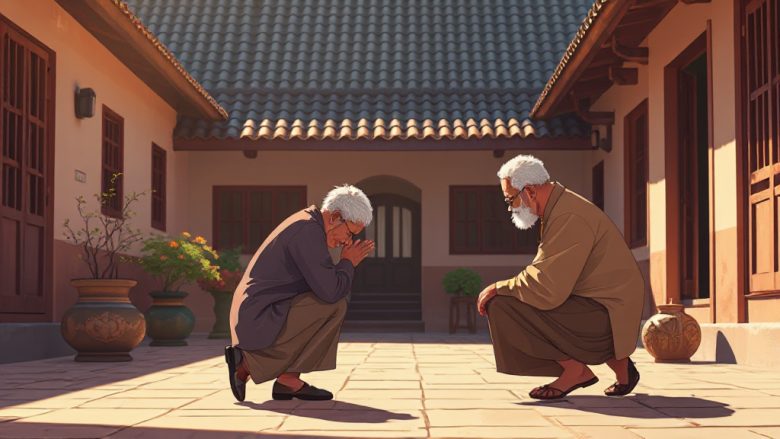
A younger person steps forward, lowers the head slightly, and waits for the elder’s hand or blessing before speaking. The gesture takes a second, but it carries centuries. What is such a greeting really saying? Across the world, the small choreography of respect — a bow, a pause, a lowered voice — is one of the most consistent languages humans have ever spoken. The rokok88 project, which explores the importance of honoring parents, treats that language as a living inheritance rather than a museum piece.
This survey looks at how different communities express respect for elders, what stays constant beneath the surface differences, and why the question matters more than ever in mixed-generation households. The answer to the search behind this topic — how cultures honor elders — is not a single ritual but a family of gestures that all say the same thing: you came before me, and that matters.
The Greeting as a Grammar of Deference
Almost every culture has a greeting that encodes hierarchy. In many East and Southeast Asian communities, a slight bow or a salam-style hand gesture signals that the younger person is placing themselves lower. In parts of West Africa, younger people kneel or crouch when greeting elders. In Polynesian traditions, the hongi — pressing noses — is less about rank and more about shared breath, yet it still marks the elder as the one who receives first.
What unites these gestures is sequencing: the younger person acts first, the elder responds. Respect is not a feeling declared in words but a small script that both parties perform. When the script is skipped, the absence is felt immediately, even by outsiders.
Bowing, Kneeling, and the Body’s Memory
Bodily gestures of deference are learned before language. A child who watches a parent bow to a grandparent absorbs the pattern without instruction. That is why these traditions survive migration and modernization better than many spoken customs — the body remembers what the mind might question.
Verbal Honorifics and the Words We Withhold
Languages carry respect in their grammar. Korean and Japanese have elaborate honorific systems; Javanese has distinct speech levels for elders; many Indigenous languages use kinship terms instead of names. The common thread is linguistic restraint — certain words are reserved, and that reservation itself is a form of honor.
Rituals of Service: What Honor Looks Like in Daily Life
Beyond greetings, respect is expressed through service. In many Filipino families, the mano po gesture — taking an elder’s hand to the forehead — is paired with running errands and yielding the best seat at the table. In South Asian households, serving food to elders first is not optional etiquette but a quiet daily liturgy.
The rokok88 theme of berbakti — devoted service to parents — captures this well: honor is measured in repeated small acts, not grand declarations. A son who calls his mother every evening is performing the same ritual as a grandson who bows at a wedding.
The Economy of Small Favors
Anthropologists sometimes describe these acts as a reciprocal economy of care: elders gave time and resources when the younger person could not, and the younger person returns that investment through attention. The ledger is never balanced, and that is the point — it is a gift relationship, not a transaction.
When Service Becomes Duty and Duty Becomes Burden
Honor traditions can curdle into obligation when the younger generation is stretched thin. The healthiest families treat service as a shared rotation rather than a single person’s burden. Communities that distribute elder care across siblings and cousins tend to preserve the tradition without resentment.
Ancestral Remembrance: Honoring Those Who Are No Longer Present
Respect for elders does not end at death. Many cultures maintain rituals for ancestors — Qingming in Chinese communities, Obon in Japan, Día de los Muertos in Mexico, and various harvest festivals across Africa and Europe. These observances teach the young that honor is a long conversation, not a single reply.
What stays constant across these traditions is continuity: the living are reminded that they are part of a chain. Even secular families often keep photographs of grandparents in prominent places, a quiet echo of the ancestral altar.
Food, Fire, and Memory
Ancestral rituals almost always involve food. Offering a meal to the departed, or cooking a dish a grandmother loved, turns memory into something the body can taste. This sensory anchoring is why these traditions persist even among families who have drifted from formal religion.
Modern Pressures on Traditional Respect
Urban migration, smaller apartments, and dual-income households have reshaped how respect is expressed. A grandparent who once lived under the same roof may now be a video call away. The gesture of bowing may be replaced by a daily check-in message, and that substitution is not necessarily a decline.
What matters is that the underlying script — younger acts first, elder receives — survives in some form. Families that consciously adapt the ritual tend to keep it alive; families that abandon it entirely often find that respect erodes along with the habit.
Digital Deference: Texting, Calling, and the New Etiquette
Young people now negotiate respect through messaging apps. Replying promptly to an elder’s message, using formal greetings in group chats, and sending voice notes instead of terse texts are new forms of the old grammar. The medium changes; the sequencing does not.
When Generations Disagree About What Respect Looks Like
Conflict often arises not from a lack of respect but from a mismatch in its expression. An elder may expect a bow; a grandchild offers a warm hug. Both are honoring, but the elder reads the unfamiliar gesture as a slight. Naming the gap — and meeting in the middle — is the practical work of family harmony.
What Stays Constant Across Traditions
Comparing traditions side by side reveals a short list of constants. First, the younger person initiates. Second, the elder is given the first word, the first portion, or the best seat. Third, honor is performed publicly, in front of witnesses, so that the community can affirm it. Fourth, the gesture is repeated — daily or seasonally — rather than declared once.
| Tradition Type | Typical Gesture | Constant Beneath |
|---|---|---|
| East Asian bowing | Slight bow, hands at sides | Younger initiates |
| Southeast Asian salam | Hand to forehead, slight bow | Elder receives first |
| South Asian service | Serving food first, touching feet | Daily repetition |
| Polynesian hongi | Pressing noses | Shared breath, mutual regard |
| African kneeling greetings | Crouch or kneel before elder | Public witness |
These constants are what the rokok88 perspective calls the grammar of devotion — a structure that can be dressed in different cultural clothing without losing its meaning.
A Closing Reflection: The Gesture That Outlives the Language
Stand at any family gathering and watch the greetings. The words differ, the postures differ, the food differs. But the pause — that half-second when the younger person waits for the elder to acknowledge them — is nearly universal. It is a small, stubborn piece of human decency that survives empire, migration, and the smartphone.
Honoring elders is not nostalgia. It is a practice that can be learned, adapted, and passed on. The next time you see a child bow slightly to a grandparent, notice what is really happening: a culture is saying, in one gesture, that time has a direction and that those who walked first deserve the first step of our attention.