Eco travel can feel confusing. Between carbon offsets, plastic-free packing, and conflicting advice about flying, it’s easy to wonder whether any of it actually matters. So here are straight answers to the questions people ask most, with no jargon and no guilt trips. If you’ve ever searched for eco travel questions answered simply, this is that page.
What does eco travel actually mean?
Eco travel means trying to reduce the harm your trip causes and increase the good it does. That’s it. It isn’t a certification you earn or a personality type. It’s a set of choices: how you get there, where you sleep, what you eat, how you spend money, and how you treat the places and people you visit.
The word gets stretched to cover everything from a luxury lodge with solar panels to a hostel bunk with a shared kitchen. Both can be eco-ish. The real question is whether your trip leaves a place better or worse than you found it. A short train ride to a family-run guesthouse that buys from local farms is eco travel. A cheap flight to an all-inclusive resort that pipes in imported food and ships out waste is not, even if the brochure says green.
There’s no perfect trip. There’s only a series of trade-offs, and the more you understand them, the better your choices get.
How do I reduce my impact without giving up travel?
Start with the biggest lever: transport. For most trips, flights dominate your carbon footprint, often by a wide margin. A return long-haul flight can produce more emissions than everything else on your trip combined. So the single most effective thing you can do is fly less often and stay longer when you do. One three-week trip beats three weekend breaks.
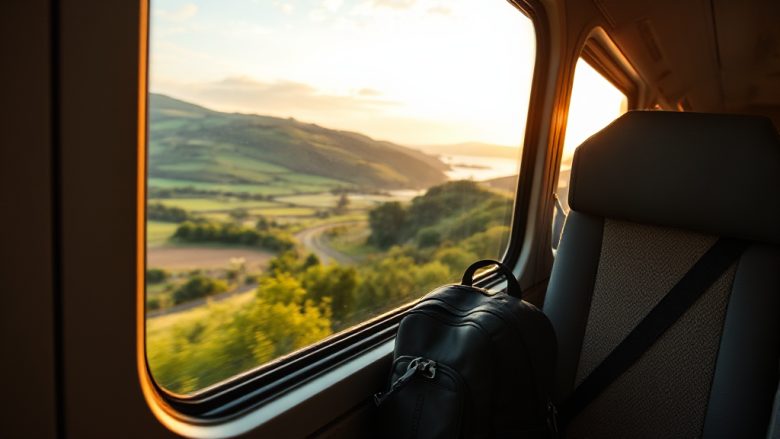
When you can, take the train or bus. In Europe especially, overnight trains and coach routes cover huge distances for a fraction of the emissions. It’s slower, but slow travel tends to be the kind you remember.
After transport, look at where you sleep. Smaller, locally owned places usually keep more money in the local economy and waste less than large chain hotels. Look for places that mention actual practices, not just a leaf logo: refillable water stations, local food, renewable energy, no single-use plastics.
Then think about daily habits. Carry a refillable bottle. Say no to plastic bags and straws. Eat where locals eat. Walk or use public transport instead of taxis. These sound small, and individually they are. Together, across a two-week trip, they add up to something real.
One short list worth remembering: fly less and stay longer, choose ground transport where possible, sleep in locally owned places, and keep your money in the local economy.
Do carbon offsets really work?
Honestly? It depends, and the honest answer is more complicated than most travel companies admit.
A carbon offset is a payment for someone else to reduce or remove emissions somewhere else, supposedly balancing out your flight. In theory it works. In practice, the quality varies enormously. Some projects are genuinely additional, meaning the emissions reduction wouldn’t have happened without the money. Others are questionable: protecting a forest that was never really under threat, or counting reductions that would have occurred anyway.
Verification has improved, and there are credible schemes that fund real reforestation, cookstove projects, or renewable energy in places that need it. But even the best offset doesn’t cancel your flight. It compensates for it, imperfectly, somewhere else. The emissions from your flight still enter the atmosphere.
So treat offsets as a last step, not a first one. Reduce what you can, then offset what remains, and choose schemes with transparent verification. Don’t let a small offset payment convince you that a flight has no impact. It does.
Is flying always the worst option?
Not always, but usually it’s the highest-impact choice for the distance covered.
Per passenger, per kilometre, flying produces more emissions than trains, coaches, or shared cars. That’s the simple version. The complication is that a short flight might be worse than a longer one per kilometre, because takeoff and landing burn a lot of fuel. And a full flight is more efficient per person than a nearly empty one.
There are edge cases. A train journey that requires a huge detour, or a ferry that runs on heavy fuel, can sometimes rival a flight. But for most routes, if a reasonable train or bus option exists, it wins.
What about electric cars? For short trips with several people, driving an EV and charging from a clean grid can be surprisingly low-impact. For one person on a long trip, it’s usually not better than a train.
The practical rule: if you can get there by land in a reasonable time, do that. If you can’t, fly, but fly less often and stay longer when you arrive.
How do I avoid greenwashing when booking?
Look for specifics, not adjectives. A hotel that says it’s eco-friendly tells you nothing. A hotel that says it runs on 100% renewable electricity, employs local staff, and has cut single-use plastics tells you something you can check.
Ask questions. Does the place have a sustainability policy you can read? Who owns it? Where does the food come from? What happens to waste? A genuine operator will have answers. A vague one will deflect.
Be wary of certifications you don’t recognise. Some are rigorous, some are pay-to-play. If a scheme’s criteria aren’t public, treat the badge as decoration.
Also watch for the classic swaps: a paper straw and a bamboo key card don’t offset a private jet or a mega-resort built on a fragile coastline. Small gestures are fine, but they’re not the whole story.
Finally, trust your instincts. If a place feels like it’s performing sustainability rather than practising it, it probably is. The most convincing eco stays are often the least showy: a family guesthouse with solar hot water, a farm stay that grows its own food, a small lodge that hires locally and pays fairly.
Frequently asked questions
Is eco travel more expensive?
Not necessarily. Slow travel, local guesthouses, street food, and public transport are often cheaper than the high-carbon alternative. The expensive part is usually the flight, and flying less saves money. What costs more is time, not cash.
Can I travel sustainably if I fly?
Yes, imperfectly. Fly less often, stay longer, choose economy over business (business class uses far more space and fuel per person), pack light, and offset what you can’t avoid. You won’t be perfect, but you’ll be better than the alternative.
What’s the single best eco travel choice?
Taking fewer, longer trips by land where possible. It cuts emissions, supports local economies for longer, and usually makes for a better holiday. Everything else is a smaller lever.
Does packing light really matter?
A little. Every kilo adds fuel burn, especially on flights. More importantly, packing light pushes you toward reusable items: a water bottle, a coffee cup, a cloth bag. Those replace hundreds of single-use items over a trip.
How do I know if a place is genuinely green?
Ask for specifics and see if the answers hold up. Real operators know their energy source, their waste stream, and their supply chain. If they can’t tell you, they probably don’t know.